
How to Pack Dishes and Glasses in Plastic Moving Bins (Even Without Packing Paper)
Short answer: Line the bottom of the tote with a thick layer of towels, wrap each plate in a dish towel or linen, and stand plates on edge like records in a dish rack. Stuff glasses with socks, wrap them, and pack them upright with soft fill in every gap. Keep dish totes light, well under the 50 lb limit, and label them fragile on every side.
Dishes are the box most people worry about. The good news is that a rigid plastic tote is a solid home for them. It won't crush under the boxes above, and its walls won't soften if the truck sits in a Florida rainstorm.
You also don't need a stack of packing paper. Your own towels, sheets, sweaters and socks can do the job, and they have to move anyway. Here's how to do it step by step, drawing on guidance from moving and home-improvement sources.
Researched and checked October 28, 2026. Prices and rules change, so confirm with the source before you rely on them.
How do you pack dishes for moving without packing paper?
Use soft household textiles as your padding. Home Depot's packing guide lists dish towels, napkins, throws and even socks as alternatives to paper. PODS suggests towels, clothes and linens as padding inside boxes.
Skip newspaper for anything you care about. Home Depot and HireAHelper both warn that newsprint ink can transfer onto dishes and is hard to clean off.
What supplies do you need to pack dishes in totes?
Gather everything before you start, so you're not hunting for padding halfway through a tote. Most of this is already in your linen closet and dresser.
Count your textiles against your dishes. A rough rule is one dish towel per dinner plate and one sock per glass. If you run short, a small roll of bubble wrap covers the fragile pieces.
How do you set up a plastic tote for dishes?
Start with a thick, soft base. Home Depot recommends about six inches of crumpled paper in the bottom of a dish box. In a tote, a folded bath towel or a small blanket does the same job.
Pack heavy items lowest. PODS says heavy cookware such as pots and pans belongs on the bottom. Put dinner plates and heavier bowls next, then lighter pieces near the top.
Leave room for a top layer of padding so nothing touches the lid. HireAHelper advises leaving space for cushioning between the dishes and the top of the container.
Should dishes be packed vertically or horizontally?
Vertically. HireAHelper says plates pack better on their edges, like records, because they're stronger that way and survive shifts in transit. Home Depot says to load wrapped plates on their side, as you would a dishwasher. PODS gives the same advice.
U-Haul's own Dish Saver Kit uses inserts that stand plates upright. Group plates of the same size together so they support each other, and pad between each one.
How do you pack bowls, mugs and glasses?
Wrap glass and ceramic bowls one at a time. PODS says to place them on their sides, facing the same direction. Only plastic bowls should be nested together.
For glasses and mugs, stuff the inside first, then wrap the outside. Home Depot says to fill interiors, pad mug handles, and pack glasses upright in rows. A clean sock pulled over a tumbler works as both stuffing and sleeve.
PODS notes that matching glasses can stand upright in rows. Mixed sizes may fit better on their sides, as long as every gap is filled.
Pack cups and mugs in the upper layer of a tote, above the plates. Give handles extra padding, since they're the first part to snap. Keep teapots, gravy boats and other odd shapes for the top, wrapped in a thick towel.
How do you pack wine glasses and stemware?
Stemware needs the most care. Angi suggests stuffing the bowl with tissue, then rolling the glass burrito style three to five times. Home Depot adds extra padding around the stem itself.
Without cell dividers, Angi recommends standing glasses upright in one layer, alternating stem to rim. Put a firm divider between layers; a folded towel over a piece of cardboard works in a tote. Close the lid and give it a gentle shake. If anything rattles, add padding.
For heirloom crystal, consider a cell-divided carton inside the tote. Home Depot suggests double-boxing very fragile pieces, with cushioning on all sides.
Is packing paper or bubble wrap better for dishes?
Bubble wrap protects better; paper is cheaper. PODS recommends bubble cushioning for fragile items like plates and thin-stemmed glasses, and says paper alone suits items less likely to break. Angi also says bubble wrap generally protects better, while paper works in several tight layers.
Towels sit somewhere in between. They're thick and free, but bulkier, so you fit fewer pieces per tote. A sensible mix is towels for everyday plates and bowls, and a few sheets of bubble wrap saved for stemware and your favorite pieces.
How heavy should a tote of dishes be?
Our rule for every tote is 50 lb or less. Dishes get heavy fast, so aim lower for kitchen totes. Home Depot advises keeping dish boxes under 40 pounds, since heavy boxes are more likely to be dropped. HireAHelper gives a similar 40 to 45 lb ceiling.
An easy check is to lift the tote waist-high. If it's a strain, take some plates out and top up with towels instead. Half a tote of dishes plus a layer of linens is often the right load.
How should you label and load dish totes?
Mark dish totes fragile on the lid and on every side, as PODS and Home Depot both advise. Add an arrow showing which way is up, and note the room. Label a first-night tote with plates, cups and the coffee mug you'll want right away.
Our packages include labels, which you can stick on the lid and ends. When loading, stack dish totes on top of heavier, sturdier totes, never under them.
Load dish totes into the truck last, so they come off first. On the drive, keep them on the floor of the truck rather than high on a stack. If you're moving a short distance, you can also carry the most precious pieces in your car.
What is the easiest way to unpack dishes?
Unpack the kitchen first, while the textiles are still clean and folded. Wipe the cabinets, then lift plates out one row at a time. Shake out each towel over the tote so chips or crumbs don't scatter.
Drop the towels and linens straight into the laundry or the linen closet. That's the quiet bonus of packing without paper: there's no pile to throw away. Once the totes are empty, nest them, and we pick them up from your new place.
When are plastic totes a good fit for a kitchen, and when are they not?
Totes work well for everyday dishes, glasses, small appliances and pantry goods on a local move. Their hard sides and snap-on lids handle stacking and wet weather better than cardboard.
They're not the best fit for very large platters, tall vases or a big crystal collection. Those may travel better in a purpose-made dish pack or cell-divided box, which you can place inside a tote or pack on its own.
How tote rental works
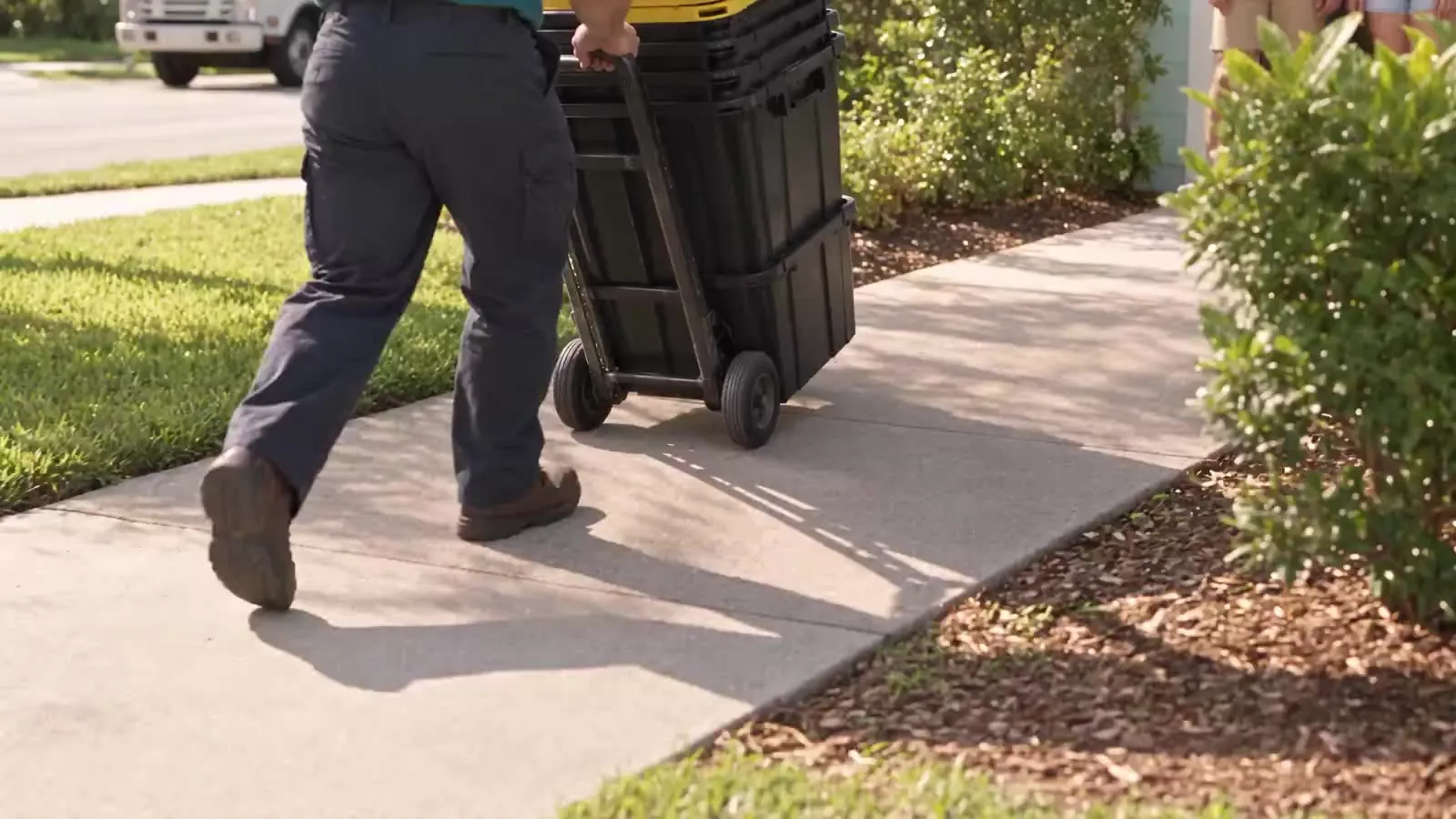
1We deliverClean totes, lids, labels and a dolly at your door. 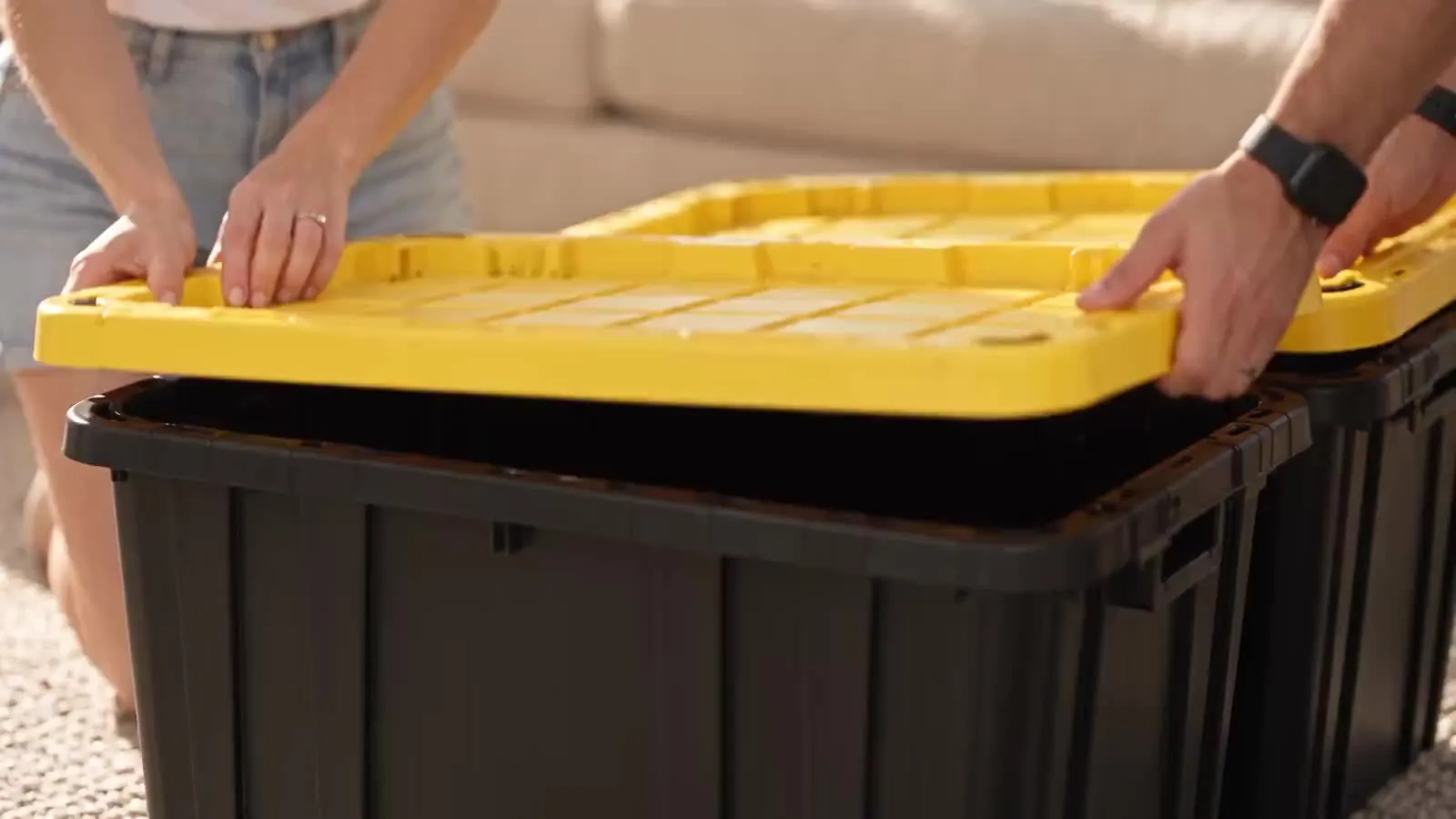
2You pack and moveSnap the lids on, stack, and load your truck or car. 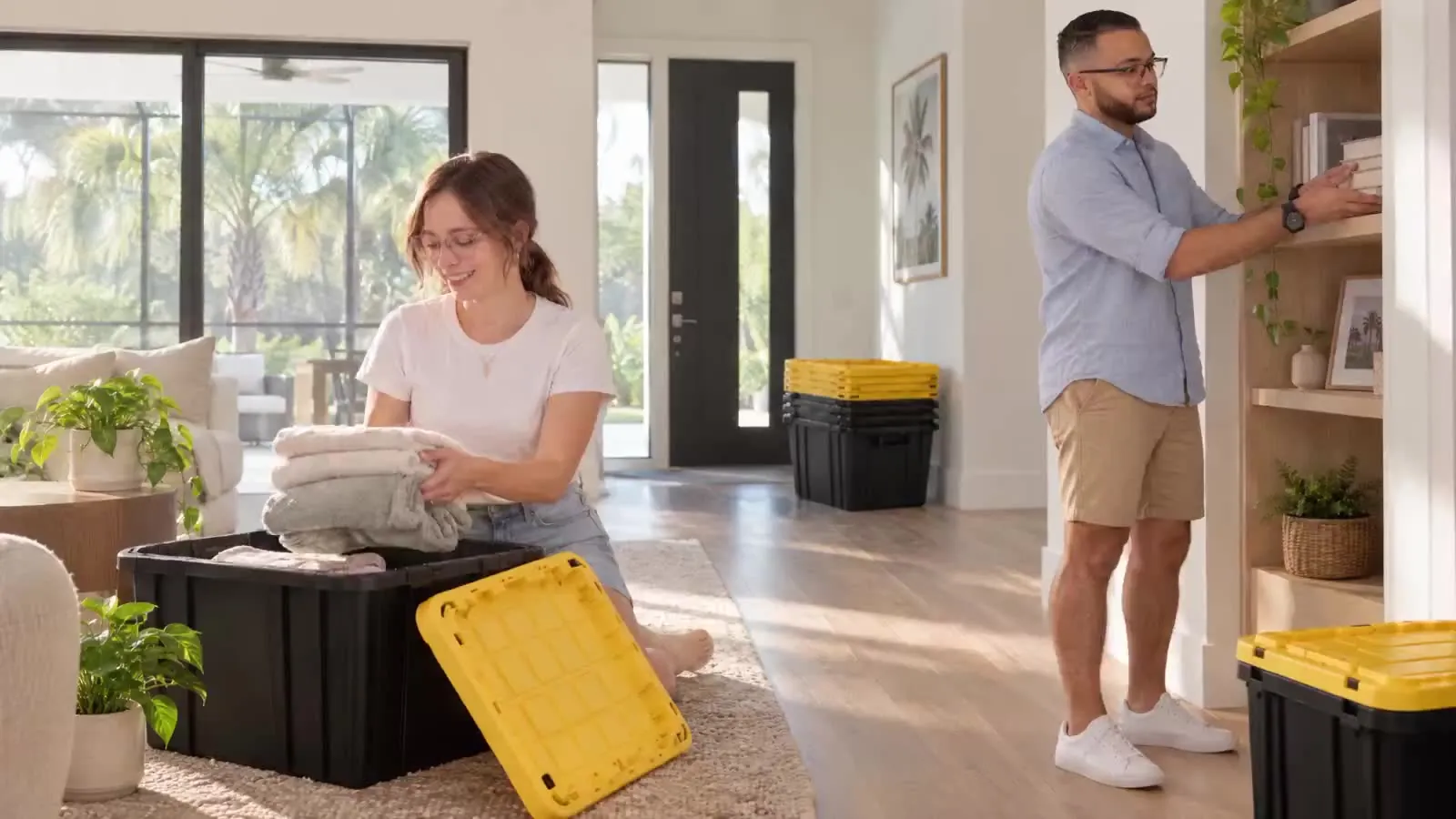
3We pick up the emptiesStack the empty totes by the door and text us.
Questions people ask
Can I pack dishes in plastic bins?
Yes. Line the bin with towels, wrap each piece, and stand plates on edge. Fill every gap so nothing moves, and keep the bin light enough to lift comfortably.
How do you pack glasses with no packing paper?
Stuff each glass with a clean sock or dish towel, then wrap it in another towel or T-shirt. Pack glasses upright in rows and fill the spaces around them with soft clothing.
How many plates go in one stack?
HireAHelper suggests limiting stacks to four or five dishes, with cushioning between each one. Standing plates on edge in a row is usually safer than a tall flat stack.
Is newspaper okay for wrapping dishes?
It works in a pinch, but the ink can rub off onto your dishes and be hard to remove. Clean towels, linens or plain packing paper are better choices for anything you value.
How many totes do I need for a kitchen?
It depends on how many dishes, pans and pantry items you own. Our guide to how many moving bins you need gives room-by-room estimates.
What should go on the bottom of a dish tote?
A thick, soft base, like a folded bath towel or blanket. Then put the heaviest items, such as pans or dinner plates, lowest, with lighter cups and glasses near the top.